
Van Buren Projected Versus Actual Release
A projected date is a sentence calculation. An actual release date records an event that has already occurred. The calculation can begin with the judgment's offense, offense date, sentence length, sentencing range, release-eligibility percentage, and any minimum term. Consecutive sentences run one after another, while concurrent sentences run together. Pretrial jail credit may count time already served. TDOC then applies the governing credit rules and later changes that the law permits.
Van Buren County Jail also holds people awaiting court action. A pretrial detainee does not have a prison-style sentence expiration merely because the roster shows an arrest date. Release might depend on bond, a hearing, dismissal, a court order, or transfer. A locally sentenced person may have a calculation based on the judgment, jail credit, and lawful county sentence administration. Van Buren publishes no local good-time policy or weekend-release rule in the reviewed sources, so state-prison rules must not be copied onto a county misdemeanor.
The same distinction applies after parole review. An eligibility date tells when the Board may consider parole. A hearing date identifies a proceeding. A grant records a decision. TDOC may still need an approved release plan before physical release. These dates answer different questions.
Find a Van Buren Release Date
Choose the source by custody type. The county jail cannot calculate a TDOC sentence, and FOIL is not a history of every local pretrial booking. A federal projected date belongs to the Bureau of Prisons system. Start with the place that now has legal custody, then use the judgment and release record to resolve any conflict.
- Check the Van Buren County current roster only to test whether the person is still listed in local jail custody. Do not treat absence as release.
- For a county detainee or local sentence, call the jail at 931-946-2118 and ask for the recorded calculation or release event. Ask the Circuit Court Clerk for the judgment, bond order, jail credit, or later court order.
- For a Tennessee felony sentence, open TDOC's official FOIL information page and follow the public search link.
- Match the person by name, TDOC ID, state ID, photograph, age, and offense information. Complete the CAPTCHA manually.
- Copy the exact date label on the returned record. It might refer to release, expiration, eligibility, or another sentence event, and those terms must not be rewritten as synonyms.
- Confirm a future date with TDOC or the relevant jail. After release, obtain the actual release record and recorded destination.
The county's released-inmate record path covers the separate task of proving that a Van Buren jail exit occurred. It is useful after the projected date passes. If the jail lists a transfer, follow the receiving system rather than assuming return to the community.
The FOIL search form shows the name and identifier routes available for a Tennessee felony record.
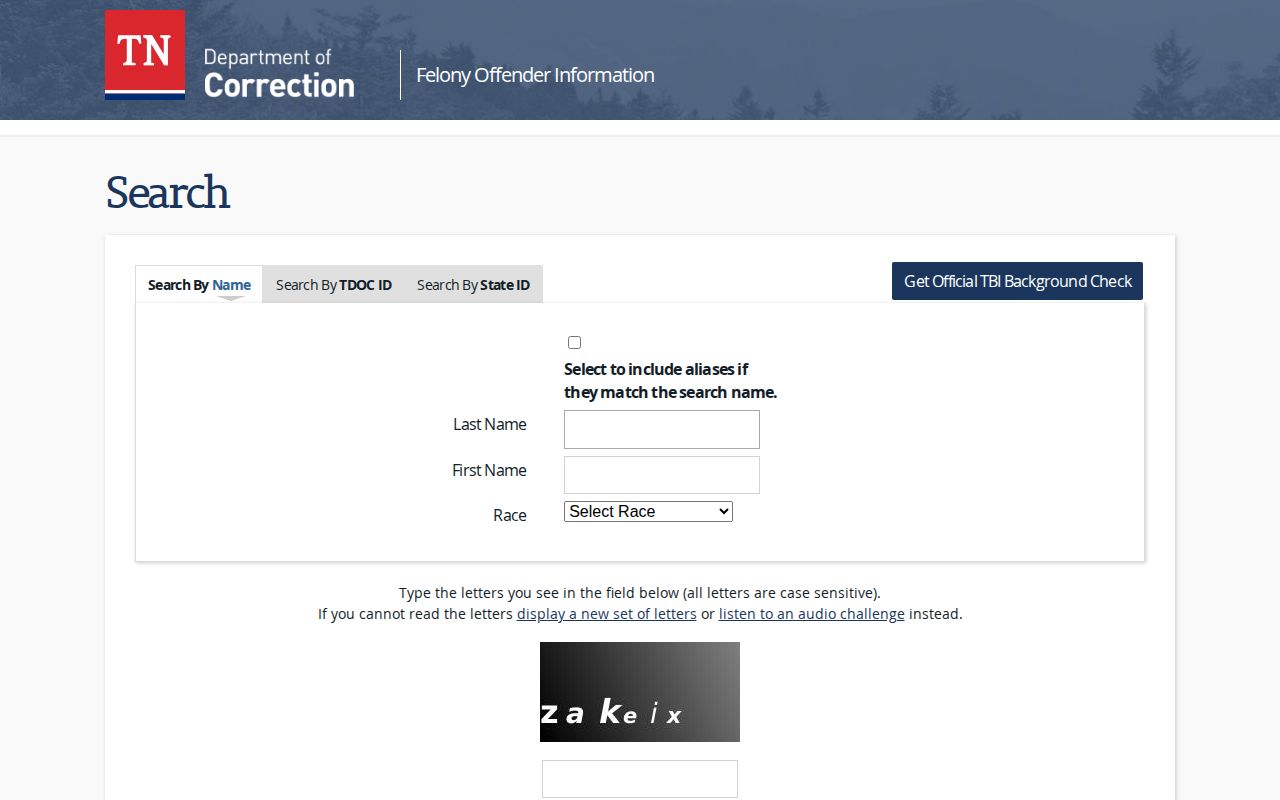
The form itself does not guarantee which date fields will appear. Only the properly matched result supplies the current labels for that person.
Note: FOIL may retain former TDOC offenders, while the county current roster is limited to people presently shown at the jail.
Van Buren Sentence Percentage Rules
Tennessee does not have one “85 percent rule” for all prisoners. Tenn. Code Ann. § 40-35-501 uses several frameworks. The research identifies baseline release-eligibility classifications such as 20 or 30 percent for an especially mitigated offender as stated in the judgment, 30 percent for Range I, 35 percent for Range II, 45 percent for Range III, and 60 percent for a career offender. Offense, offense date, judgment, and current statute version decide whether those provisions apply.
The familiar 85 percent phrase comes from a narrower rule. Subsection (i) historically required full service for specified serious offenses while allowing credits to reduce the imposed sentence by no more than 15 percent. Later provisions for offenses on or after July 1, 2022 establish additional enumerated full-service regimes. Some do not allow sentence credits to reduce the term at all. Calling every Tennessee sentence an 85 percent sentence would be wrong.
Sentence alignment matters too. Two terms served consecutively do not produce the same date as the same terms served concurrently. A mandatory minimum can also block a credit from moving release earlier. The judgment is therefore the first calculation record. TDOC's sentence administration provides the applied result. When a public field conflicts with an assumed formula, the official calculation wins.
Van Buren Release Credit Limits
Tenn. Code Ann. § 41-21-236 supplies the main Tennessee sentence-credit framework. The current law allows from one through sixteen days of credit per month under TDOC criteria. No more than eight may come from good institutional behavior, and no more than eight may come from satisfactory program performance. Credits can be reviewed, removed, or restored. They do not all have the same legal effect on every sentence.
For sentences longer than two years for offenses on or after July 1, 2024, the research shows that credits may affect parole eligibility but do not alter sentence expiration. Misdemeanor judgments use a release percentage from 30 through 100 percent, and credits cannot reduce that percentage by more than 25 percent. These provisions still depend on the judgment and applicable version of the law. A mandatory minimum or undiminished full-service sentence remains controlling.
- Release eligibility date
- The first date on which a person may qualify for consideration under the governing law.
- Sentence expiration
- The calculated end of the sentence, which may differ from physical release or supervision end.
- Sentence credit
- A lawful adjustment earned and applied under stated criteria, limits, and exclusions.
- Jail credit
- Time credited by the judgment for qualifying custody before sentencing.
- Detainer
- A request or legal basis for another agency to take custody when the current agency releases the person.
County-jail computations remain separate. No sourced Van Buren rule establishes a fixed local credit rate, holiday advance, or routine early release day. Ask the jail and clerk for the existing calculation rather than importing the TDOC monthly credit scale.
Why Van Buren Release Dates Change
Projected dates move when the facts used in the calculation move. Some changes help a person reach eligibility sooner. Others add custody time or block release to the community. The date should be read with the status, facility, sentence, and receiving-agency fields whenever those are available.
| Factor | Possible effect | Record to check |
|---|---|---|
| Credits earned, removed, or restored | May change eligibility or other calculated dates within statutory limits | TDOC sentence record |
| New or corrected judgment | Can alter term, alignment, jail credit, or governing percentage | Sentencing court and TDOC |
| Consecutive sentence or revocation | May extend custody or return a supervised person to custody | Court, Board, and TDOC records |
| Parole grant, denial, or deferral | Changes the release path but does not guarantee a gate date | Board outcome and TDOC release plan |
| Detainer or hold | May cause transfer to another jail, federal custody, or immigration custody | Release disposition and receiving system |
| Statutory amendment | May affect calculation according to offense and effective dates | Applicable statute version and agency calculation |
A TDOC release by detainer can mean the person left state custody for a Tennessee county facility. Likewise, the Van Buren roster can show a Released timestamp while hold language points toward another agency. In both cases, “released” describes an exit from the named source. It does not always mean release from all custody.
Note: Ask for the receiving agency whenever a hold or transfer appears because one system's release may begin another system's custody.
Van Buren Parole and Reentry Dates
Parole introduces at least three possible milestones: eligibility, the Board's decision, and physical release after plan approval. The Board may grant, deny, defer, or impose conditions. A hearing schedule proves only that a matter is set. A favorable vote can still be followed by residence, program, or other plan review before TDOC authorizes release. The Board of Parole hearings page explains the hearing and final-decision structure.
Mandatory reentry supervision adds another distinction. TDOC's explanation of Tenn. Code Ann. § 40-35-506 says covered felony offenses committed on or after July 1, 2021 receive a one-year supervision framework. Some eligible people may serve the final year in the community. Other covered people may have supervision after sentence expiration. Thus the projected physical release date, parole eligibility date, sentence-expiration date, and supervision-end date can all differ.
A pending-release notification can help track a change, but it cannot calculate the date. Registration steps and source limits appear on the Van Buren County VINELink check. Confirm any alert with the jail or TDOC record, especially when a detainer or transfer is possible.
The official FOIL overview describes the state fields that may be available, including sentence and release information.
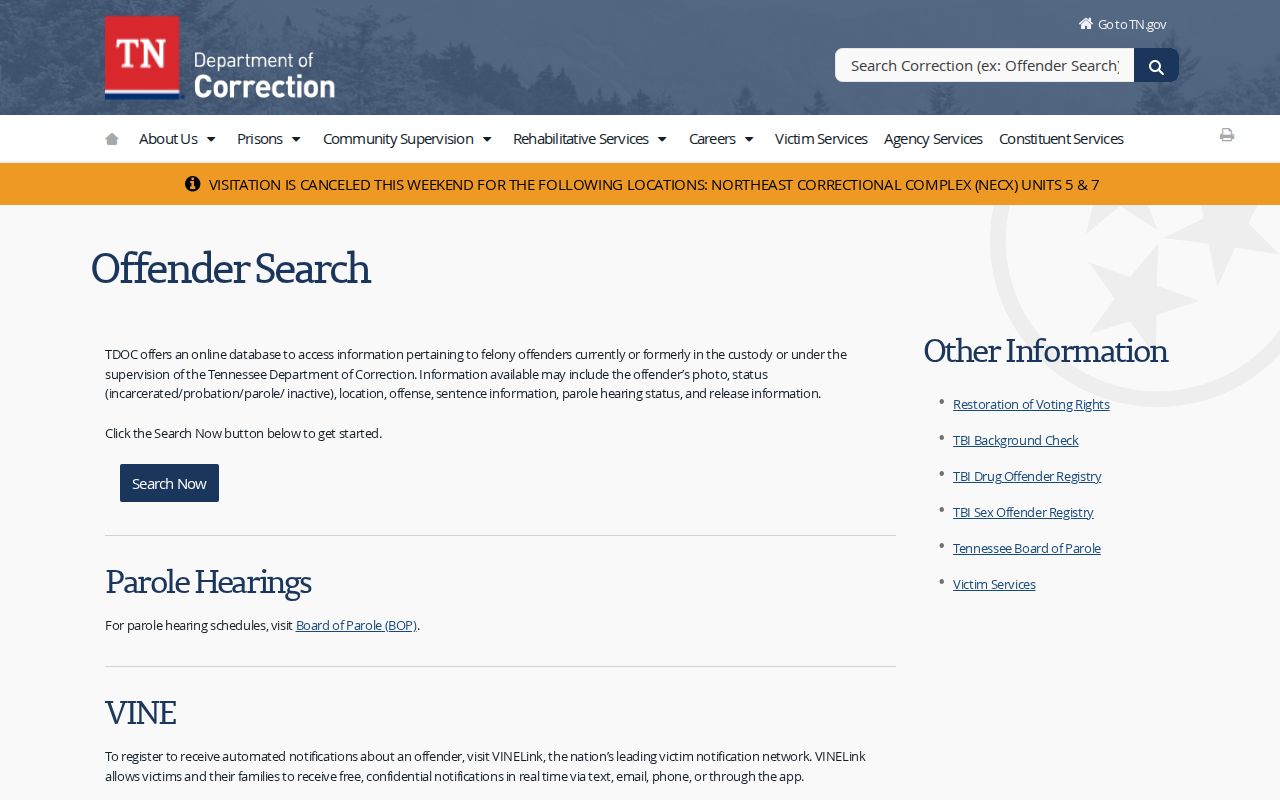
The overview supports using FOIL for a Tennessee felony record while avoiding a promise that every person will have one universal projected-date field.
Compare Van Buren Release Records
A sound date check uses the record that created each part of the calculation. The Van Buren Circuit Court judgment can show sentence length, alignment, jail credit, probation, and the legal basis for confinement. The jail can supply its recorded local calculation and the actual release report. TDOC controls the felony sentence administration reflected in FOIL. The Board of Parole controls its own decisions, but TDOC still carries out release after required steps. No single record should be stretched across all four roles.
Older TDOC material may require the archived-record process. Provide the full name, TDOC or TOMIS number when known, date of birth, and other identifiers requested by the agency. Ask for existing sentence and release records rather than asking staff to build a new date calculation. For a county record, identify the booked name and approximate booking or release period so the sheriff or clerk can locate the right file.
Once the projected day passes, look for an actual event. Van Buren's public recent-release feed lasts only 48 hours by its heading. Its exact Released timestamp proves exit from the county jail, but not the destination. A TDOC status may show state release or supervision, yet a detainer can carry the person into another agency's custody. Comparing the judgment, calculated date, actual exit, and destination prevents a projected date from being reported as an event that never occurred.